

A Revolution
What if every child had the opportunity to grow up bilingual?
On September 29, CALEC was excited to be at the French-American Foundation (FAF) presenting a topic - and book - that was close to our hearts: “The Bilingual Revolution”. This publication draws from the inspiring, real-life story of parents and advocates rallying together to establish dual-language programs in New York City public schools.
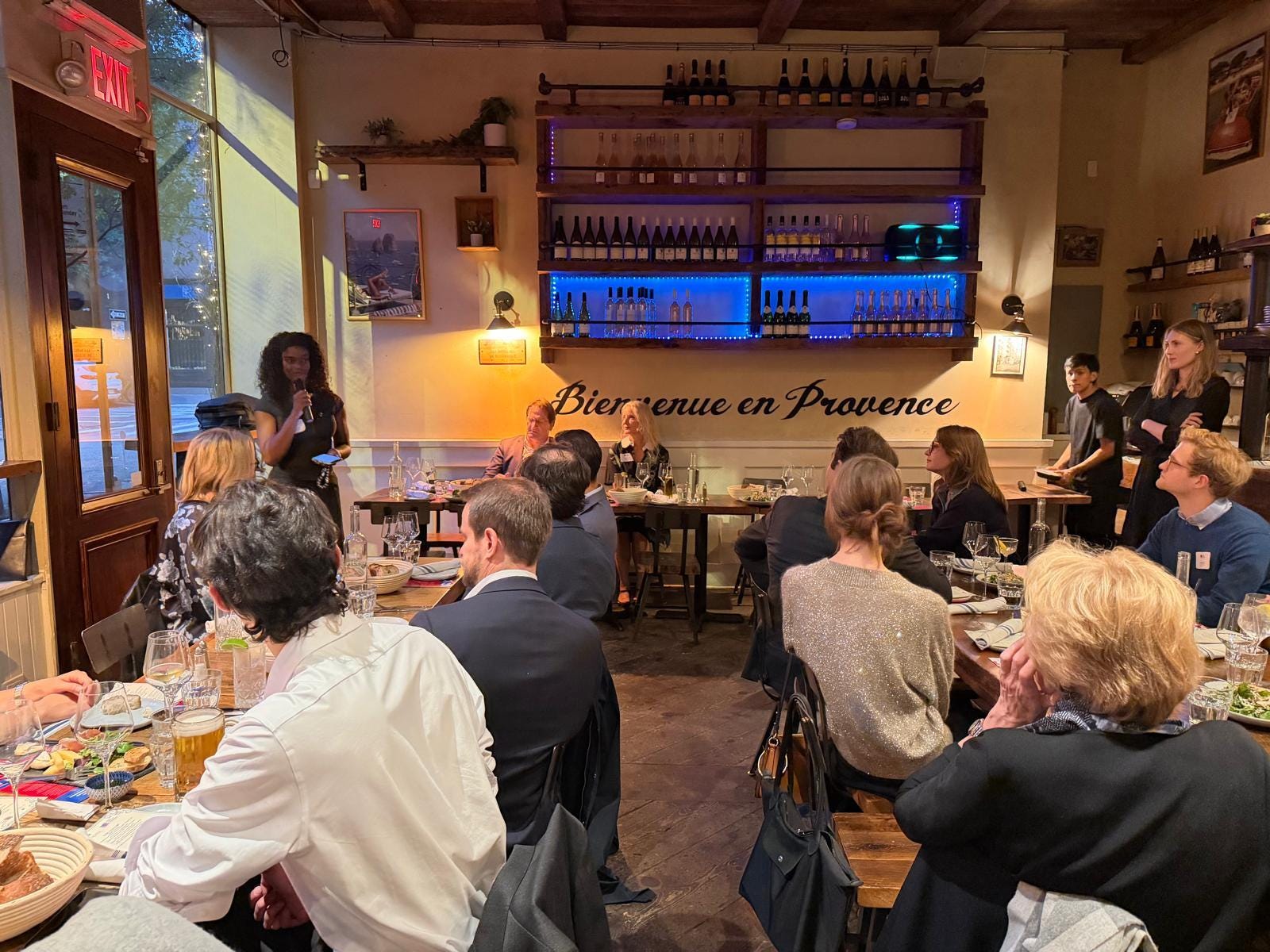
At its heart is a simple but ambitious idea: the benefits of bilingualism and biliteracy should be available to everyone.
The conversation offered an opportunity to reflect on what bilingual education can mean not only for individual learners, but for the larger issues concerning social mobility and diversity within our communities.
Learn more about The Bilingual Revolution
A Bridge
Conceiving meaningful ideas. Delivering matured works. Some may believe that to be the end of the publication cycle.
It is not.
We understand the importance of consistently ensuring that our research is visible. We seek to morph into the bridge that connects people to our works, connecting concepts to the individual. Thus, we celebrate every opportunity that enables us to present our ideas, and to transmit them to other.
This past Saturday, October 3, CALEC took our book, “Bridging Worlds”, to the 13th Annual Community-Based Heritage Language Schools Conference at the American University in Washington DC. The attention and love that we received during the talk warmed our hearts.
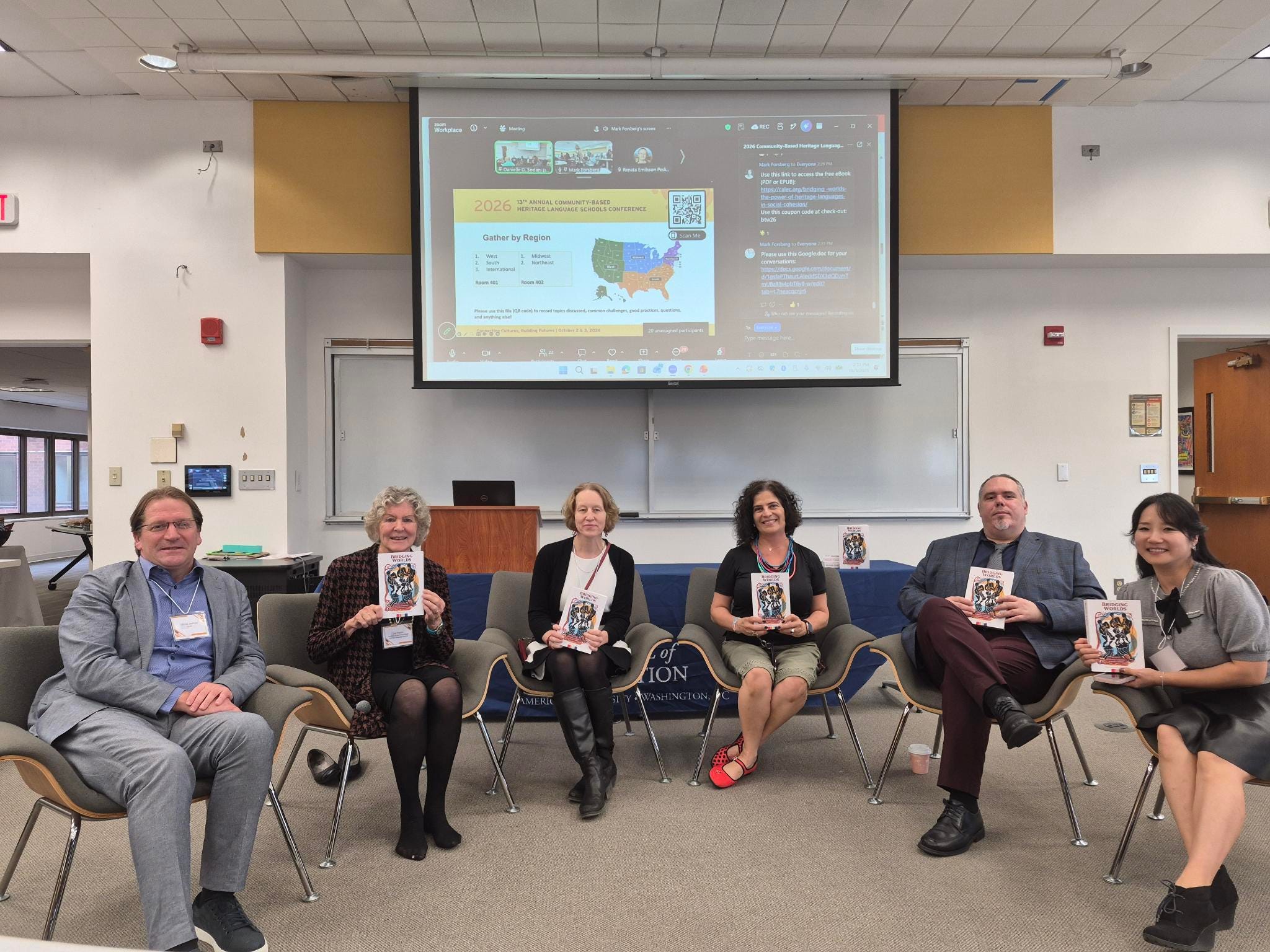
We thank everyone for all the support, and CALEC will continue to push on in our advocacy for multilingual education.
A Compass
The world is vast, mysterious, and a delight to explore. Yet, due to its grandeur, it may be hard to even know where to begin one’s exploration.
CALEC crafted our own guiding compass as an answer.
We are delighted to announce the release of “Global Citizenship Education: 30 Scenarios for Transformative Grades 5–12 Curriculum and Action”, a practical guide designed to empower educators to prepare students for an increasingly interconnected and complex world.
We want students to know it all. Designed for integration across subjects (social studies, science, world languages etc), the book offers educators flexible tools to foster meaningful learning and action in both American and international classrooms.
More than teaching students to understand the world, this publication encourages them to become active participants in shaping its future.
Retrieve your global citizen passport now!
An Author
You are a brilliant thinker who is bursting with ideas. You are an inquisitive perceiver of the shifting world. You are a natural narrator who communicates ideas clearly.
We at CALEC would love to hear from you: write the next chapter of CALEC’s story with us.
Embarking on a new literary journey, CALEC seeks to explore how language programs can prepare students concretely for professional life. Contributions may be research-based, practice-based, or a combination of both approaches! We are particularly interested in frameworks, and strategies that can be adapted across institutions and geographic contexts. This is the perfect opportunity to sharpen your writing, reflect on phenomenons within the world today, and potentially become a publishing author!
For further details on the topic and submission guidelines, visit our webpage (see button below!) We can’t wait to read all the wonderful proposals you submit!
An Exclusive
As our dearest gentle readers are aware, CALEC had just published a two-volume series “Beyond Perfection: The Beauty of Imperfect Language Learning” last month. We are overwhelmingly touched by all the warm feedback we have received since its release. More excitingly, we were encouraged by the conversations and reflections that the series has sparked.
Naturally, we did not want to leave everyone hanging with questions. That is why CALEC dived deep into an exclusive interview with Dr. Kevin Wong himself, co-author of the Beyond Perfection series and Associate Professor of Education at Pepperdine University. We wanted to pick the brain of a main driving force behind the publication, and understand how this work was conceived.
In the interview, Dr. Wong talks about his motivations, his personal views, and the key frameworks of the books. When asked about the crucial takeaways that readers should leave with, Dr. Wong responded:
“I hope readers come away understanding that the ways multilingual people use language have value on their own terms. Multilingual lives develop through relationships, histories, migration, education, family, community, and experience. They rarely follow a single trajectory, and they do not need to approximate an idealized model of equal or native-like proficiency in order to be meaningful.”
Beauty lies in the unquantifiable, the spontaneous, the distinct. We hope that everyone finds joy in crafting your own language learning journeys.
Read the full, beautifully written article here on our New York In French website!
A Family
We were extremely excited and pleased to attend the Forum of French Associations held at the Consulate of France on Saturday, Oct 10th.
Organised with Comité des Associations Françaises et de langue française de New York (CAFUSA), the forum brings together the diverse francophone associations within New York City. More than just a platform enabling the exchange of ideas, the forum also crucially reminds us of the strong Francophone community in the city. To CALEC, it appears less to be a formal socialisation event, but more closely resembles a gathering of friends and family.
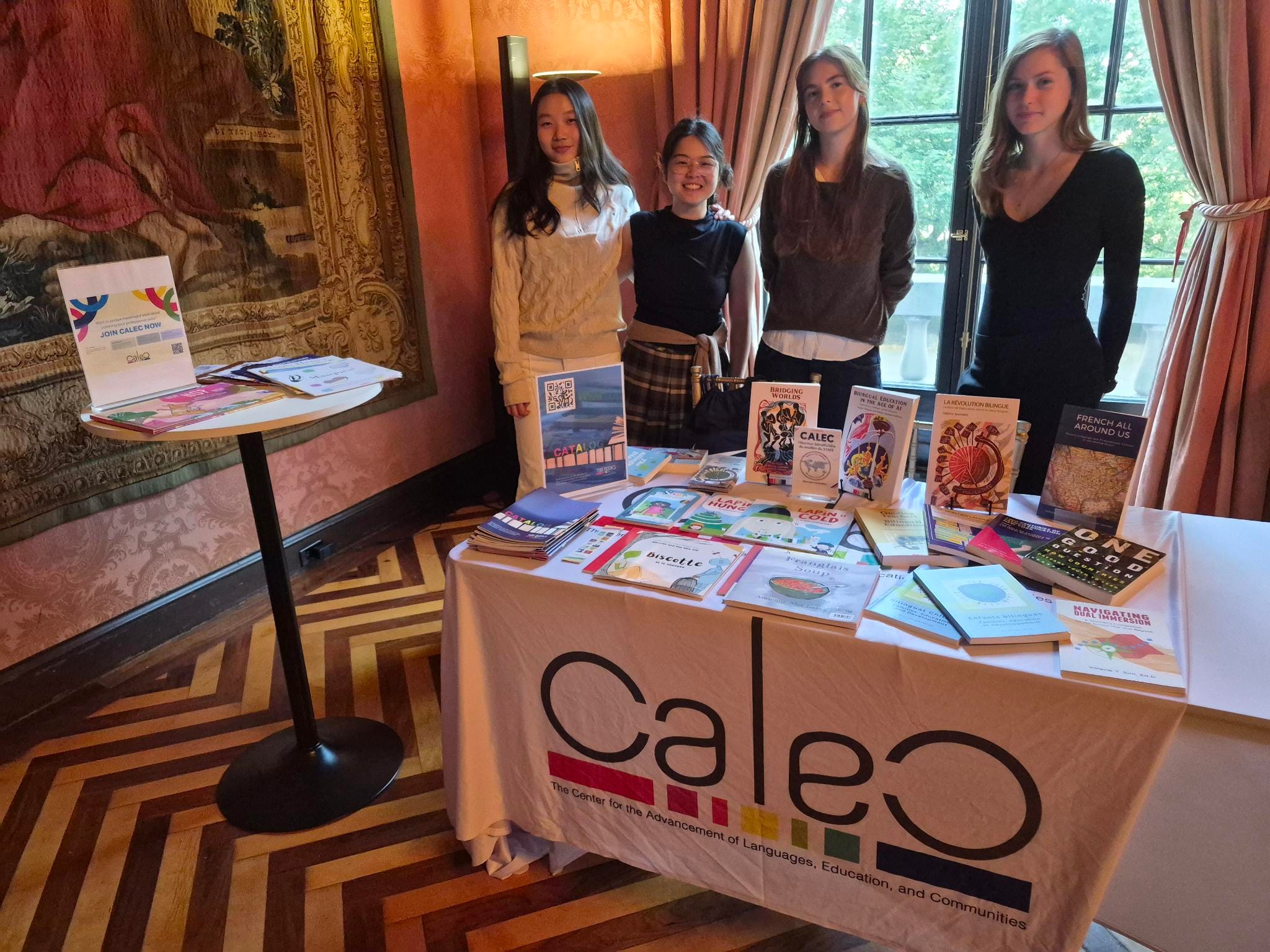
We thoroughly enjoyed the meaningful conversations we exchanged with everyone who attended the event, and were touched by the number of attendees who shared our fierce passion for the advancement of multilingualism.
Till the next forum!
A Conversation
Is multilingualism niche? Is it truly a “quirky” area of conversation that should be brushed aside due to low applicability and “uncertain” benefits? Well, we have a clear answer awaiting us in the latest article published by The Conversation.
Nearly one in four pupils in English primary schools has a first language other than English, making multilingualism an everyday reality in classrooms.
A recent National Literacy Trust survey held in the UK found that multilingual respondents were more likely to enjoy reading than those who spoke only English at home (77% versus 49%) and more likely to read every day (50% versus 29%).
Yet linguistic diversity remains underrepresented in children’s publishing. Translated and bilingual books make up a relatively small part of the market, with existing translations concentrated in only a handful of languages. More importantly, the idea of “language” and “translation” should also be expanded. Inclusion extends beyond the spoken tongue. Accessible reading can also involve braille and tactile books, audiobooks, and communication aids for children with different needs.
The article ultimately argues for “inclusion by design”.
“A rights-based approach cannot rely on families repeatedly requesting special provision. Linguistic diversity, disability and different forms of communication must instead be considered from the beginning.”
That is the exact goal that CALEC is committed to. Our release of our audio and ebook bundles is the first of many steps that we are taking to ensure that our resources accommodate a variety of diverse needs.
Delve into the more refined details of the article here:
National Year of Reading: linguistic diversity should be central to reading for pleasure initiatives
A little bonus finale
Looking to build your professional experience while increasing educational accessibility?
Center for the Advancement of Languages, Education, and Communities (CALEC) is seeking your help in the creation and distribution of educational content to local communities!
As an organization dedicated to multilingual education, our family is equally as diverse and international. Find a project that you’re interested in and be part of this movement to make language accessible for children in underserved communities!
Our Teams:
Development: Power our financial sustainability via grant qualification and B2B school partnerships
Tech: Maintain our digital ecosystem across calec.org, calec.fr, and our proprietary ri2l.org platform
Content: Design bilingual curriculum paths, language-learning games, and native-speaker read-aloud modules
Distribution & Outreach: Build pipelines into global library networks, independent bookstores, and school districts
Publishing: Manage the end-to-end editorial and design lifecycles of our scholarly essays and cultural-history book series
We collaborate asynchronously and shared workspaces, giving you the freedom to execute entirely on your own schedule.
Ready to make a difference? Click the button below to submit your application today!
Follow CALEC for upcoming events, new publications, educational resources, and multilingual stories from around the world.
Instagram: @calecny
Facebook: CALEC.ORG
LinkedIn: CALEC
Thank you for being part of our multilingual community.